
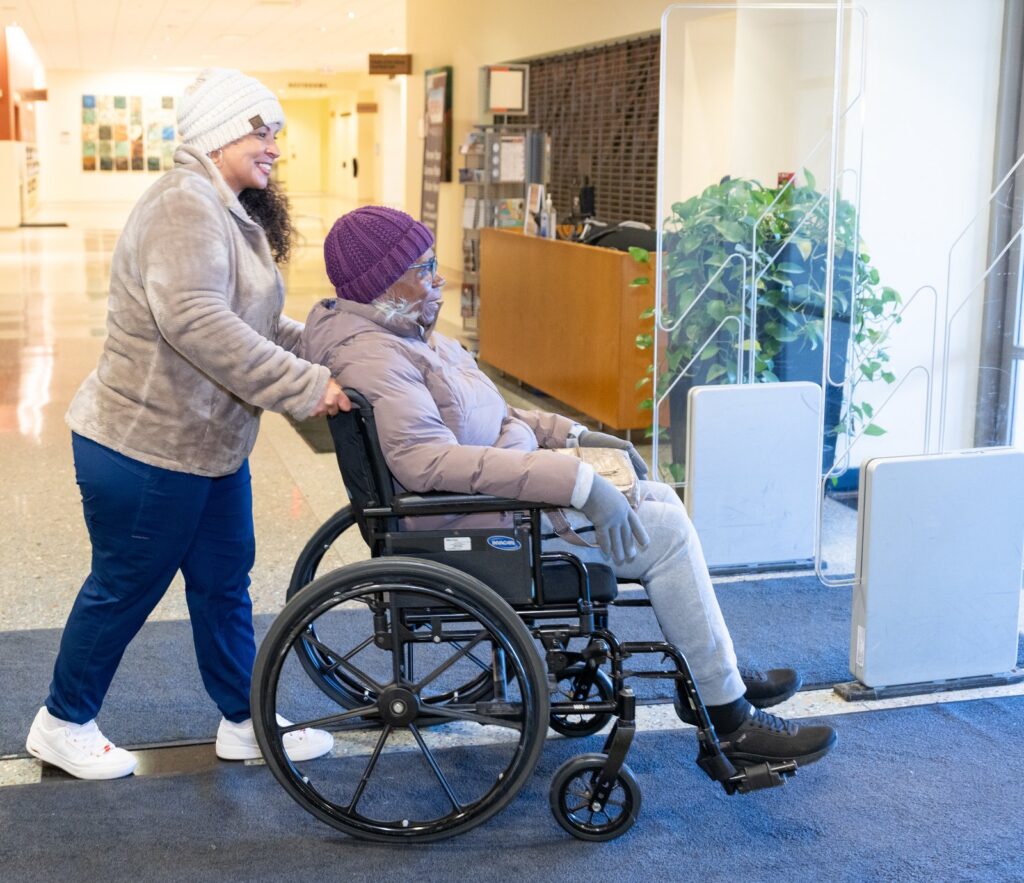
A safer home supports independence. Begin with the areas used every day, correct immediate dangers first, and involve the older adult in decisions about changes.
Entrances, stairs, and hallways
- Check that railings are secure and easy to grip.
- Improve lighting at entrances, stairs, and long hallways.
- Remove clutter, cords, shoes, and other trip hazards from walkways.
- Repair uneven steps and consider whether a ramp or added handrail is needed.
Living areas
- Remove loose rugs or secure carpets firmly to the floor.
- Create a clear walking path around furniture.
- Use chairs that are stable and easy to sit in and rise from.
- Keep phones, glasses, water, and other daily items within reach.
Bathrooms
- Consider grab bars near the toilet and inside the bathing area.
- Use nonslip surfaces where floors may become wet.
- Improve lighting, including a night-light for overnight trips.
- Review whether the person can enter, bathe, toilet, and stand safely.
A near-fall, new fear of walking, furniture walking, or difficulty rising from a chair may be enough reason to request a mobility and safety assessment.
Bedroom and overnight safety
- Keep a light, phone, and needed items near the bed.
- Create a clear path from the bed to the bathroom.
- Check whether the bed height allows safe transfers.
- Discuss overnight support if confusion, toileting, falls, or wandering are concerns.
Kitchen and daily routines
- Place commonly used items at a safe, reachable height.
- Check whether the stove and appliances are being used safely.
- Watch for spoiled food, skipped meals, or difficulty preparing food.
- Keep medication routines separate from food storage unless instructions say otherwise.
Emergency readiness
Keep emergency contacts easy to find. Make sure the older adult has a charged phone or other way to call for help. Review the plan for severe weather, power loss, fire, falls, and urgent health changes.
Home safety is not a one-time project. Review the home after a fall, hospitalization, new diagnosis, medication change, or change in strength, balance, vision, or memory.
This article offers general education and does not replace medical advice, an assessment, or an emergency response. Follow the instructions of your healthcare team. Call 911 for an emergency.