
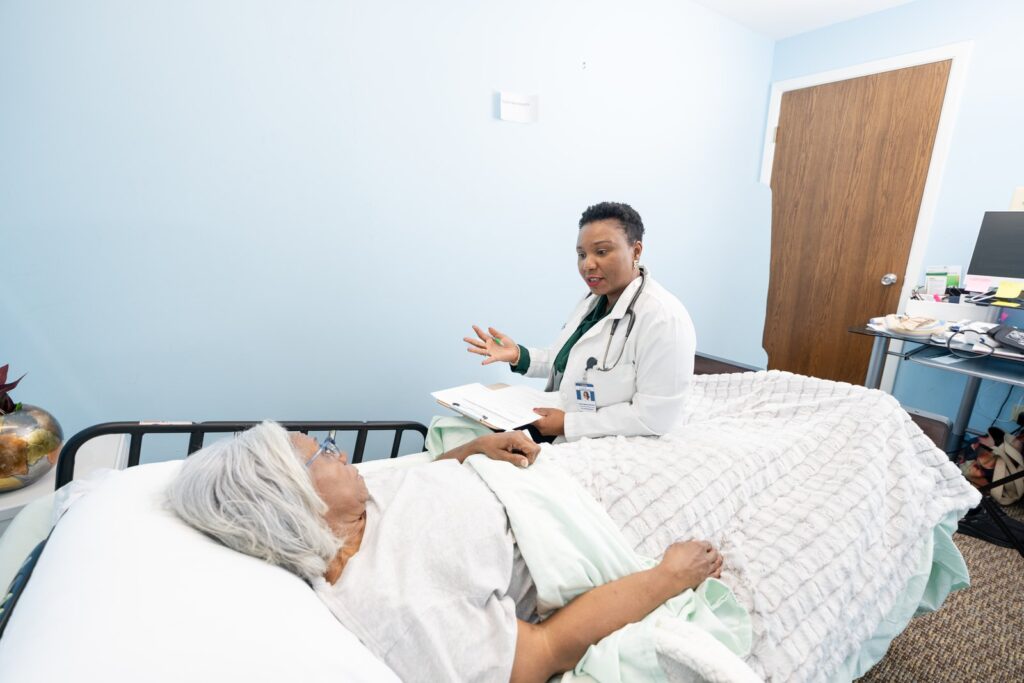
The best way to understand what an older adult needs is to ask them. The next step is to look at the whole picture—not only one event.
Look for changes in everyday life
Changes may happen slowly. Family members who live far away may notice them first during a visit. Others may hear small clues during phone calls. Pay attention to patterns in these areas:
- Meals and hydration: The refrigerator is often empty, food is spoiled, meals are skipped, or the person seems weaker.
- Personal care: Bathing, dressing, grooming, or laundry has become harder or less consistent.
- Mobility and safety: There have been falls, near-falls, new fear of walking, or trouble getting up from a chair.
- The home: Mail, trash, dishes, or household tasks are building up in a way that is not normal for the person.
- Medication routines: Doses are missed, mixed up, or taken at the wrong time.
- Mood, memory, or judgment: The person seems more confused, withdrawn, anxious, lonely, or vulnerable to scams.
Notice what the family is carrying
Family stress is also part of the care picture. A spouse may be losing sleep. An adult child may be leaving work often. Siblings may be arguing because no one is sure who is responsible.
Needing relief does not mean the family has failed. It may mean the care needs have grown beyond what one person can safely manage.
“What has become harder lately, and what kind of help would make your day feel easier without taking away your independence?”
Begin with a respectful conversation
- Choose a calm time, not the middle of a crisis.
- Share specific observations without blame or judgment.
- Ask what the older adult wants to protect most.
- Start with the smallest helpful change when it is safe to do so.
- Ask a healthcare professional for an assessment when health, memory, or function has changed.
Support can begin in small ways
The first step may be help with meals, bathing, transportation, housekeeping, companionship, medication reminders, or a few hours of respite. As needs change, the plan can grow.
The goal is not to take control away. The goal is to create enough support for the older adult to remain safe, involved, and connected to the life they value.
This article offers general education and does not replace medical advice, an assessment, or an emergency response. Follow the instructions of your healthcare team. Call 911 for an emergency.